

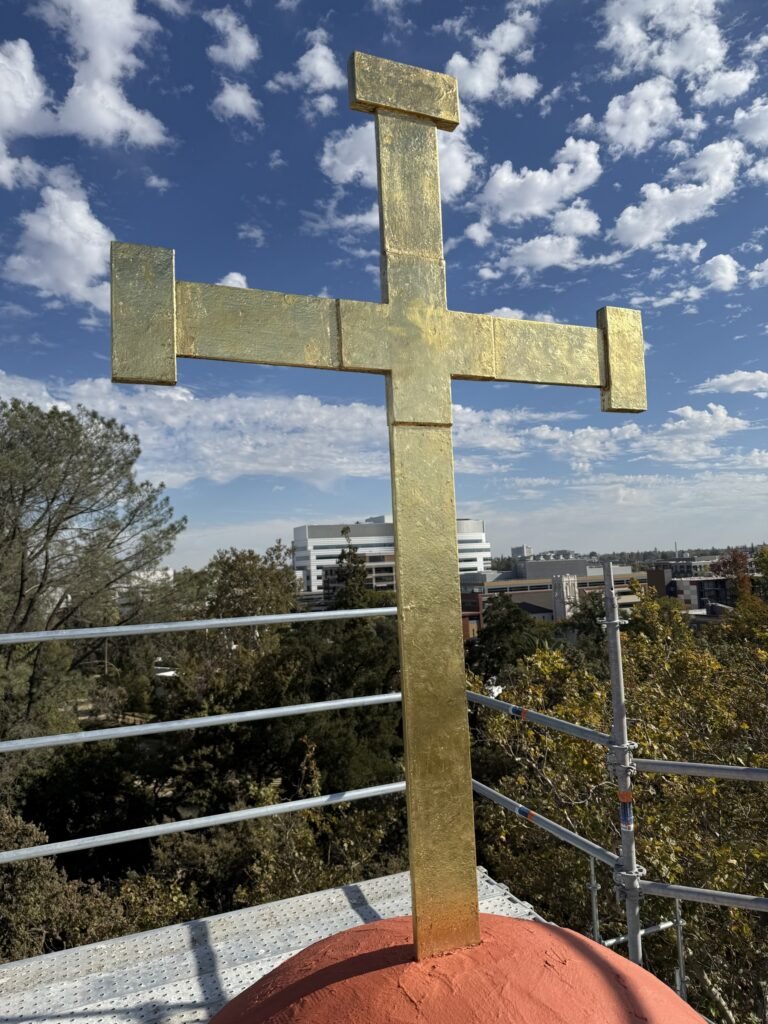
Gold leaf in the context of the whole detail
A church cross, carved ornament or sanctuary detail may call for new gilding or selective renewal of an existing finish. The starting point is the particular surface: its material, condition, exposure and relationship to the surrounding work. A photograph of an isolated worn area is useful, but an overall view helps explain where that detail belongs.
New gilding and regilding are different starting points. A painted element may be considered for a new gold-leaf finish. Existing gilded work may call for a more selective approach within a wider restoration. The existing surface needs to be understood before the treatment can be defined.
Seven rooftop crosses in Sacramento
The 2024 rooftop-cross project at St. Francis of Assisi involved seven crosses that had previously been painted brown. We prepared the surfaces and gilded them with 23-karat gold leaf. This was new gilding on those crosses, rather than the renewal of an earlier gold finish.
The project provides an example of gold leaf used on exterior church details. Its documented material and treatment describe that work specifically. A different substrate, existing coating or exposure needs to be considered on its own terms.
Regilding within a larger interior
At St. Anne’s in Porterville, selective regilding formed part of a restoration that also included painted ornament and decorative stencil work. The gold details were considered with the surrounding finishes and existing interior.
A project may therefore involve a single cross or detail, or a combination of gilding, painted surfaces and other material work. The bronze, gilding and marble page explains that wider material scope. For painted imagery and architectural decoration, see murals and religious painting.
Photographs that help start the discussion
- An overall view of the object and its church setting.
- Closer photographs of the existing surface, wear or damage.
- The material and any known history of earlier finishes.
- Whether the work is indoors or outside, and its city and state.
A gold-colored finish alone does not establish how it was made or what treatment it needs. Share what is known and photographs taken from safely accessible positions. Discuss a gilding or finish project with Jeffrey.