Art in the worship setting

Catholic Liturgical Design and Sacred Art

Sacred art and furnishings considered in relationship to the altar, ambo, font, tabernacle and surrounding church interior.

  • Artwork and furnishings considered together
  • Proportion, sightlines and movement through the space
  • New pieces coordinated with existing architecture
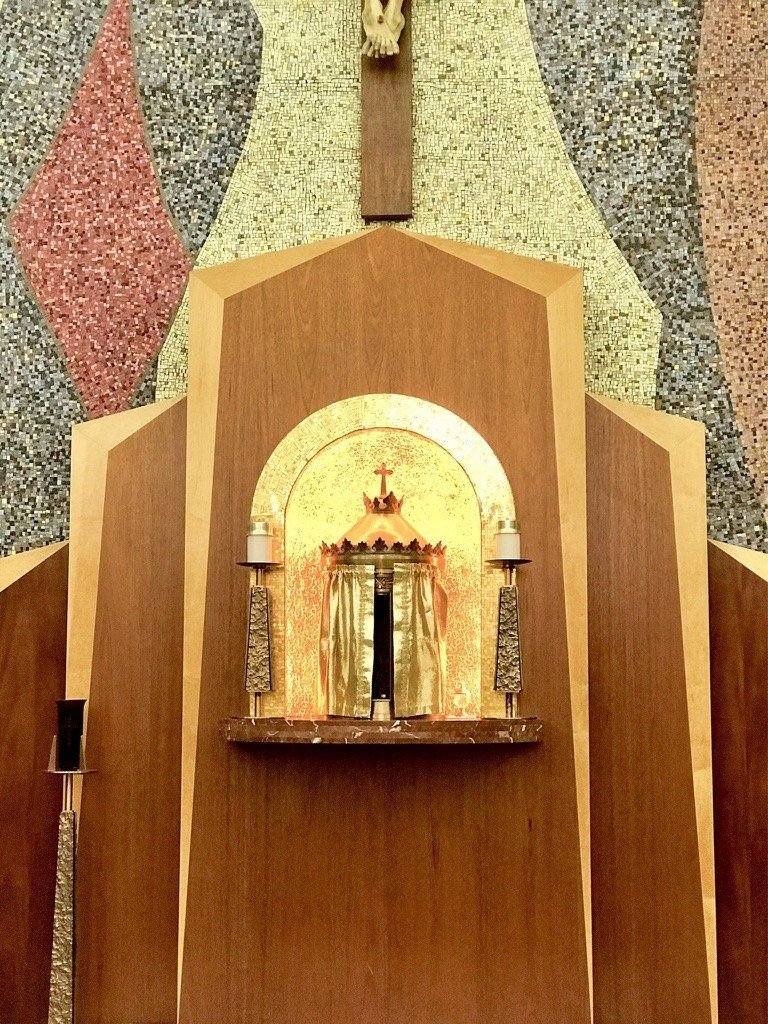
Completed gold mosaic niche and tabernacle above the marble platform at Saint Columban.

Catholic liturgical design considers how worship, sacred art and the church interior work together. The altar, ambo, font, tabernacle and devotional images each have a purpose, and their scale and placement need to suit the space where they are used.

Begin with the parish’s use of the space

The conversation starts with how people gather, approach the altar, hear Scripture, celebrate baptism and pray before sacred images. Sightlines, circulation, light and existing architecture affect the design. Clergy and the parish’s project team guide the liturgical goals and identify the people responsible for review.

A focused project may concern one furnishing or image. A wider project may connect several parts of the sanctuary or nave. Sanctuary furnishings covers particular objects; church interior renovation covers coordinated renewal of an existing interior.

Work with what is already there

Existing art may remain, be restored or move to a different setting as the parish considers its goals. A new piece should be planned beside the work that will stay.

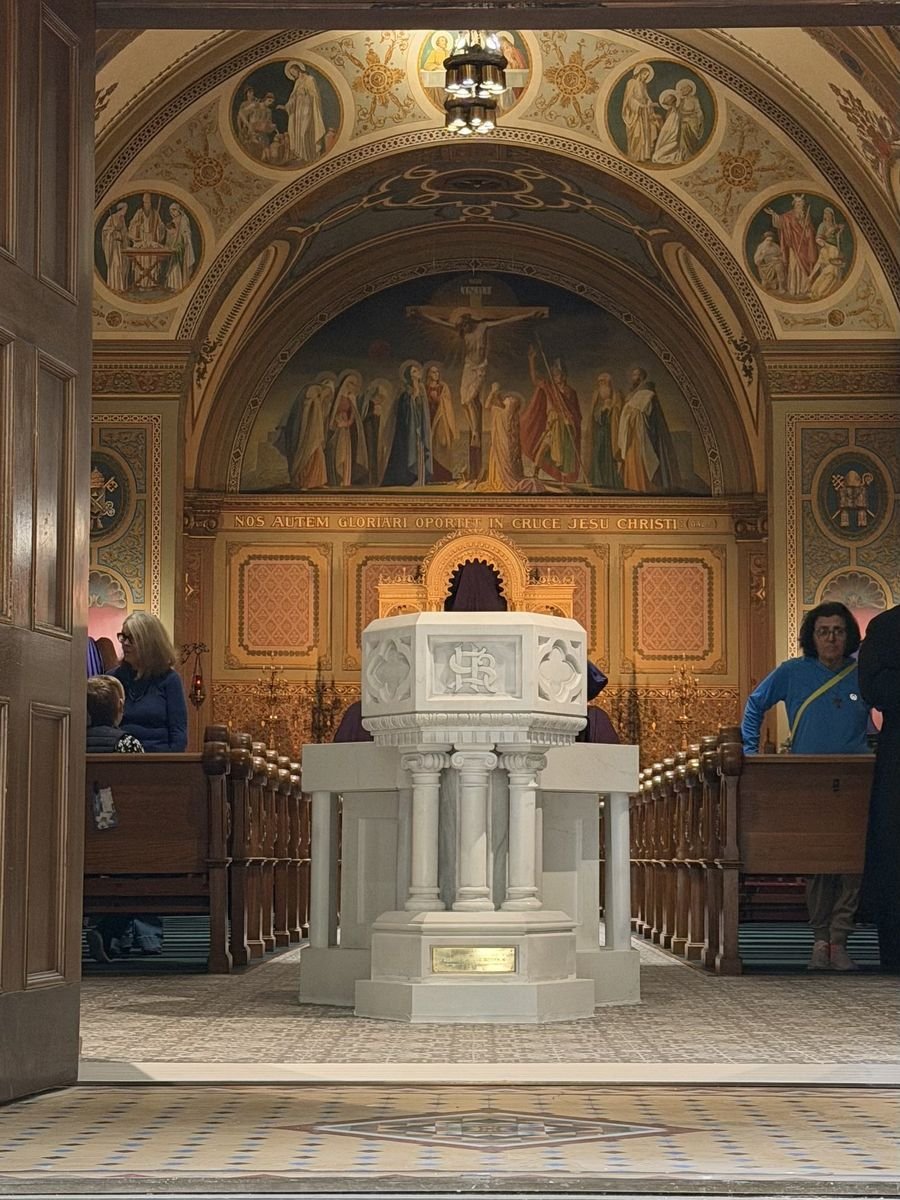
At Saint Columban in Garden Grove, a new tabernacle niche brought together a gold-mosaic setting, a fitted marble platform and lighting. At St. Francis of Assisi in Sacramento, an existing historic font was restored and relocated as part of a new arrangement with a marble basin, pillars and a pump.

Prepare for a design conversation

Send sanctuary photographs, the parish’s goals and any available plans or dimensions. Identify existing elements that should remain, known condition concerns and who will review the direction. Drawings and references can develop as the project takes shape.

Discuss liturgical design or explore the services for individual crafts.
Planning your project

A useful place to begin.

Bring photographs of the existing space, the parish’s goals and any available plans. Identify the furnishings that should remain and the people involved in reviewing the project.

Talk with Jeffrey

Can we begin with a furnishing rather than an entire renovation?

Yes. A focused furnishing or artwork commission can be considered within its wider setting. That may include the relationship to the altar, ambo, font, tabernacle and nearby finishes.

Can artwork and material details be coordinated?

Yes. The Saint Columban tabernacle setting brought gold mosaic, marble and lighting together. A coordinated project can consider how individual elements relate without assuming that every furnishing needs to be replaced.

Project examples

  • Restored historic font and new marble basin in the completed arrangement near the church doors.
    The restored historic font and new marble basin, seen frontally.
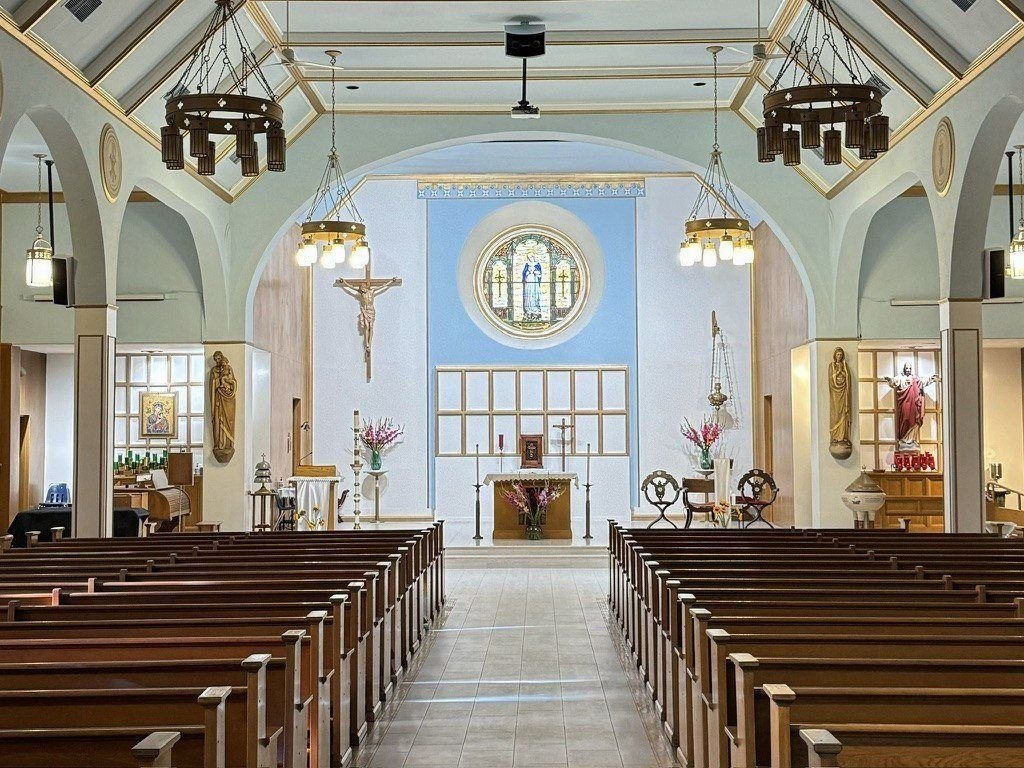
  • Completed Immaculate Conception interior with the tile aisle and restored sanctuary finishes.
    Nave and sanctuary considered together after the 2024 remodel.

A useful place to begin.

Bring photographs of the existing space, the parish’s goals and any available plans. Identify the furnishings that should remain and the people involved in reviewing the project.

Talk with Jeffrey → Can we begin with a furnishing rather than an entire renovation? Yes. A focused furnishing or artwork commission can be considered within its wider setting. That may include the relationship to the altar, ambo, font, tabernacle and nearby finishes.

Yes. The Saint Columban tabernacle setting brought gold mosaic, marble and lighting together. A coordinated project can consider how individual elements relate without assuming that every furnishing needs to be replaced.