We design and create church mosaics and restore existing ones. A new commission starts with the sacred subject and architectural setting. An existing mosaic starts with its condition, including the surface beneath it.
A mosaic for a particular place
Subject, scale and color need to suit the wall, niche or devotional setting. Light and viewing distance affect how the image reads from the congregation’s usual position. Nearby marble, paint and furnishings are part of the design conversation.
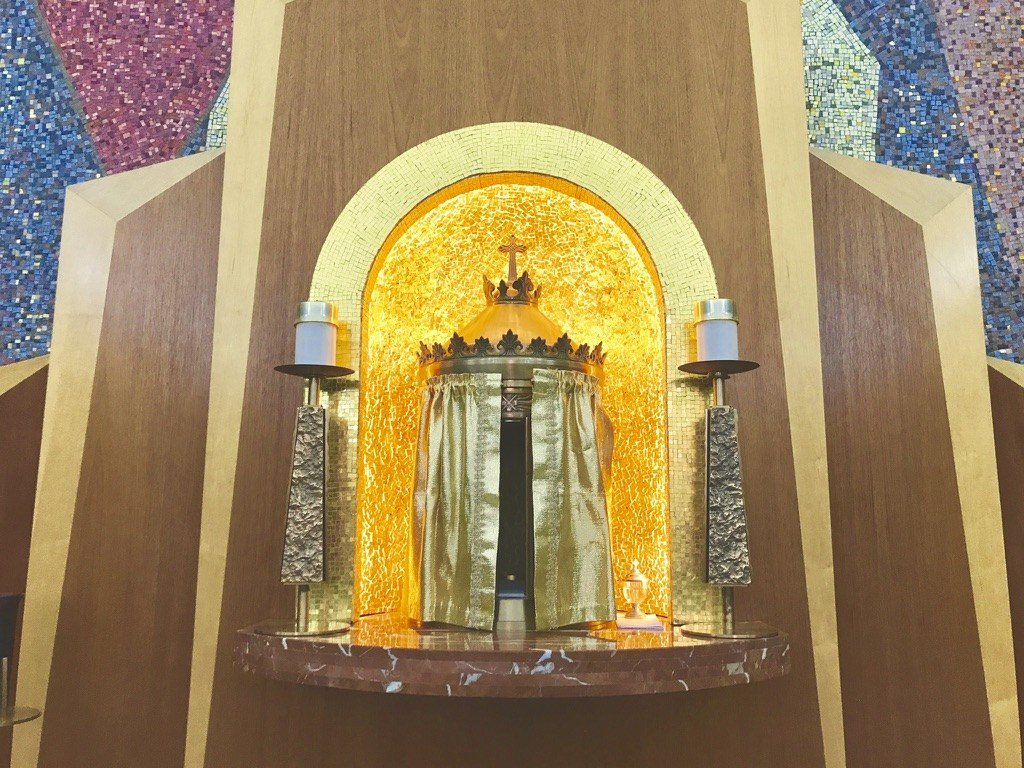
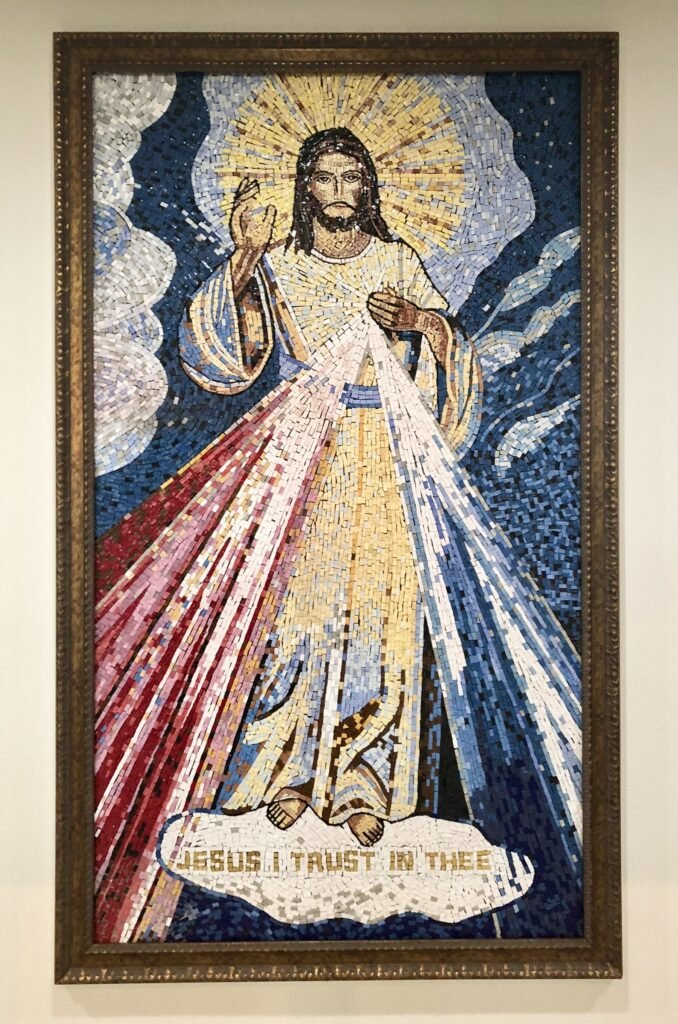
At Saint Columban in Garden Grove, we designed, assembled, framed and installed a Divine Mercy mosaic in 2018. A separate 2017 tabernacle-niche commission combined gold mosaic, a marble platform and lighting. The two projects served different purposes within the church.
Restoring a mosaic
Loose or missing pieces, cracking, old repairs and moisture concerns need to be examined in context. The appropriate work depends on the mosaic and its support.
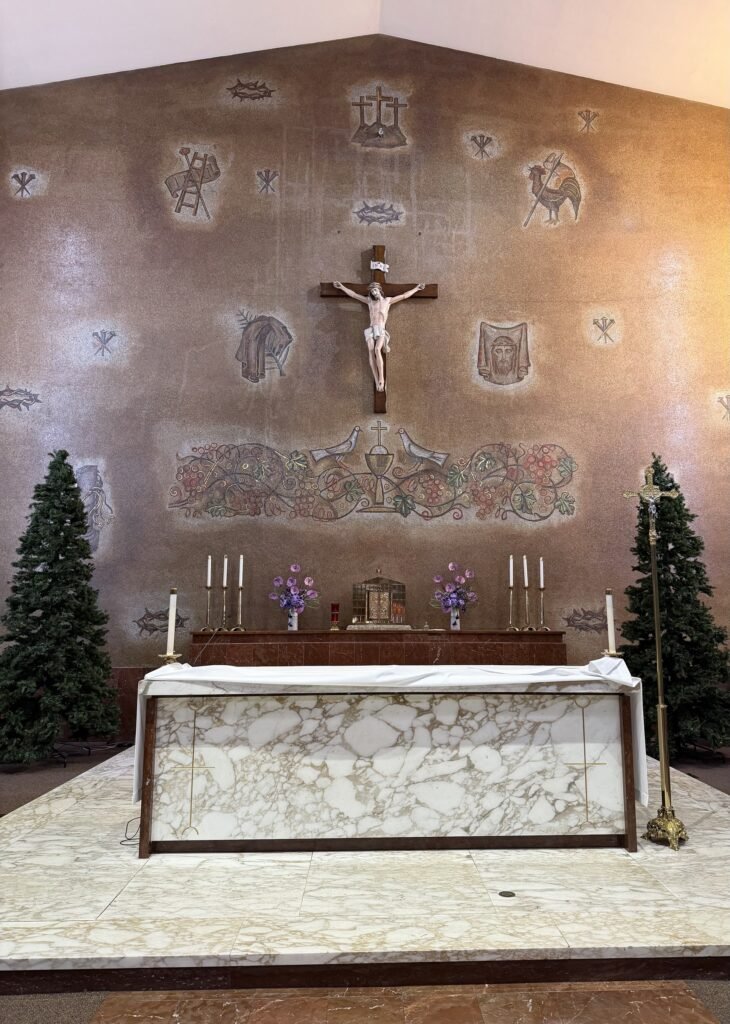
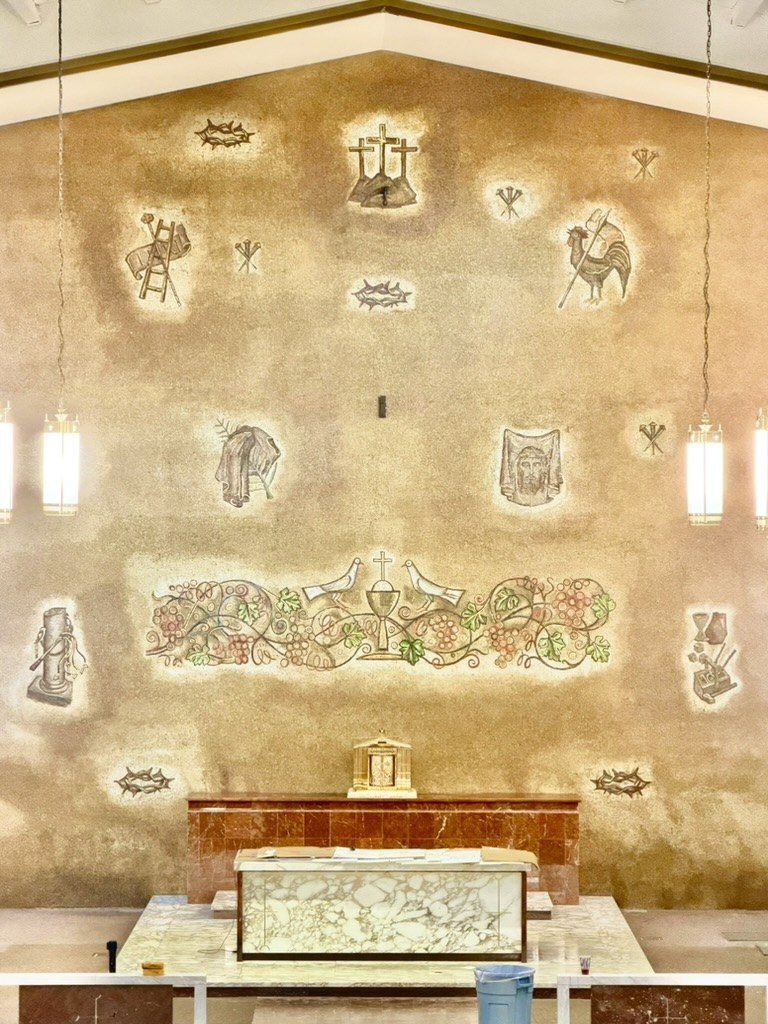
At St. Francis of Assisi in Bakersfield, restoration of the large sanctuary mosaic and side chapels included removal of covering tile, cleaning, localized crack and loss repairs, selected regrouting and color blending. Existing differences in panel height were retained.
Planning a new work or a repair
For a commission, send the intended subject, photographs of the setting and approximate dimensions. For restoration, add full views, close photographs of concerns and any known history. Note height, access and signs of moisture or movement.
Read the mosaic planning guide or discuss your mosaic. For a mosaic within a larger sanctuary project, explore liturgical design and sanctuary furnishings.