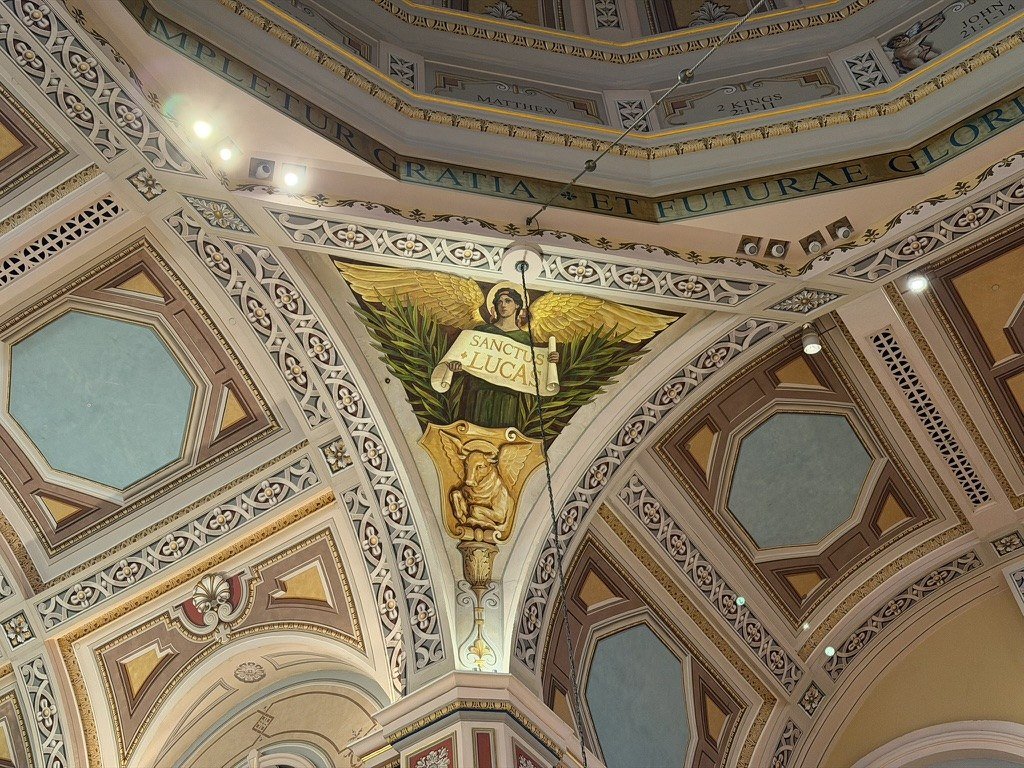
We create new murals and religious paintings and restore existing works. A commission begins with the subject and setting. Restoration begins with the painting’s construction, condition and history.
A new painting for the church
A mural or religious painting needs to work at the scale of its wall and the distance from which people will see it. We discuss the sacred subject, composition, color and surrounding artwork with the parish. Photographs and dimensions of the proposed setting are a useful start; a completed design is not required.
For a painting that forms part of wider changes, see church interior renovation and Catholic liturgical design.
Restoring an existing work
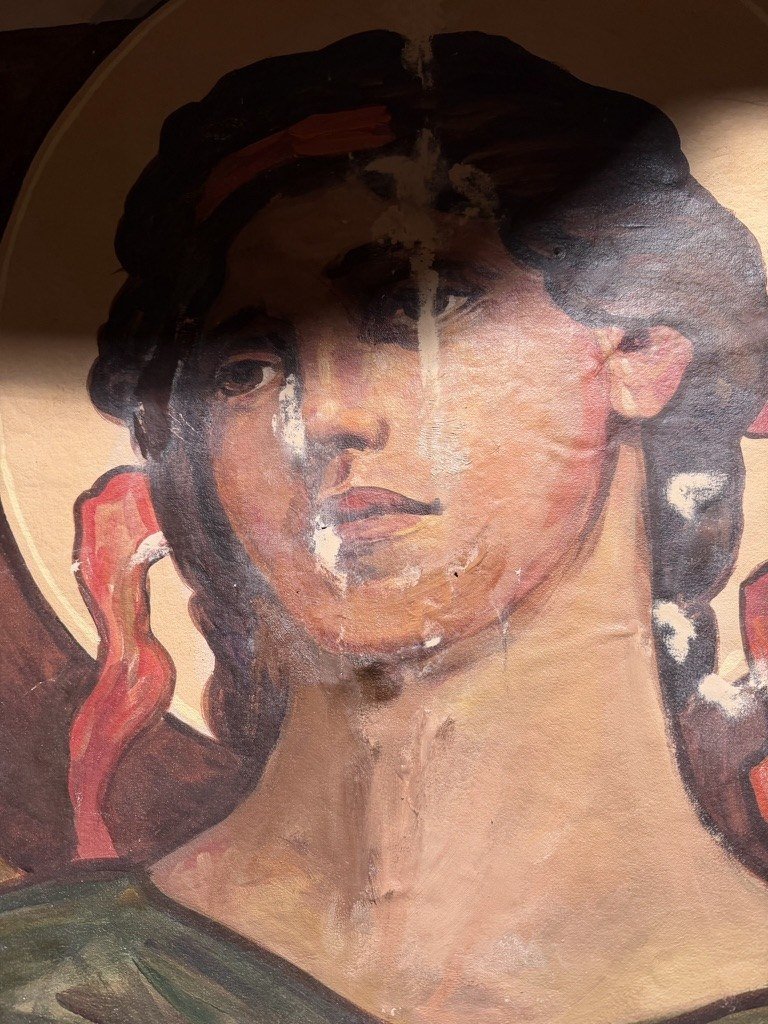
Paint loss, tears, cracking, stains or separation from a wall can have different causes. A canvas mural and a painting made directly on a wall also need different planning. We review the work and its setting before proposing treatment. Restoration of an existing image and a decision to repaint it are separate choices.
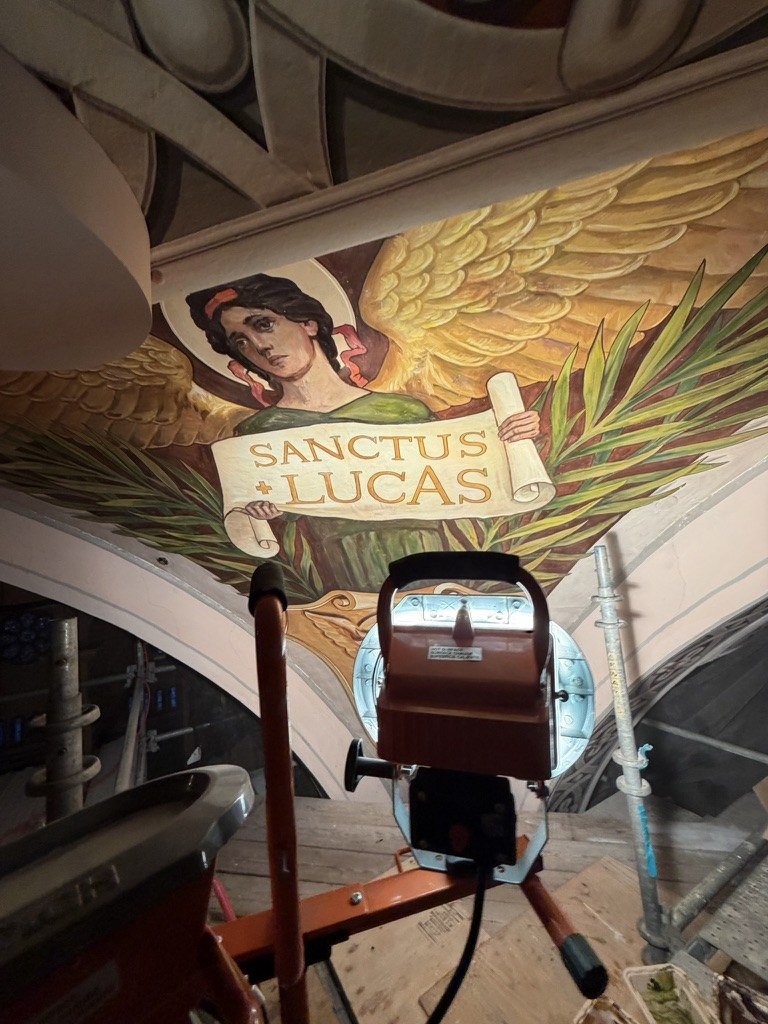
At the Cathedral of the Blessed Sacrament in Sacramento, work on four canvas murals included repairing tears and paint damage, removing failed primer and adhesive, preparing receiving surfaces and re-adhering the canvases with added concealed mechanical fasteners.
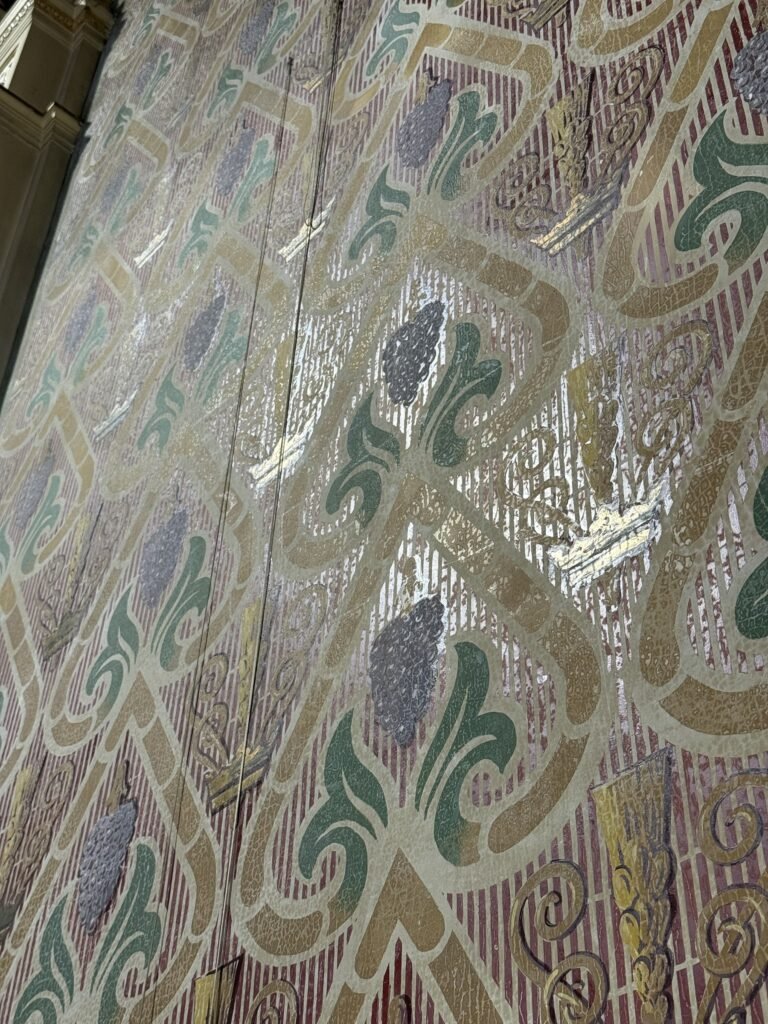
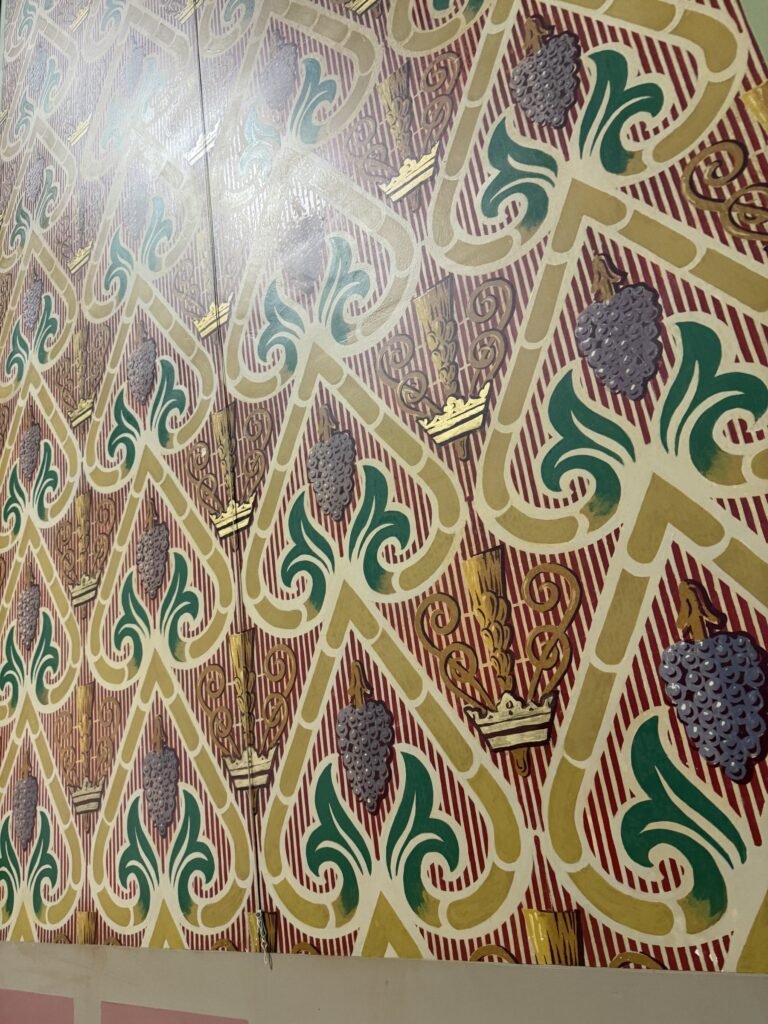
At Our Lady of Refuge in Castroville, we removed graffiti from Angelo Lanzini’s St. Cecilia painting, selectively repaired it with oils, cleaned it and applied new varnish. St. Anne’s in Porterville is an example of decorative stencil painting and related interior restoration.
What helps us review a painting
Send a view of the whole wall or room, closer photographs of the painting and any visible damage, approximate dimensions and known history. Include edges or attachments only where safely visible. Note the height and access, and any recent moisture or building work.
For new work, add the intended subject and who will review the design. Discuss a painting project. We also welcome public-art and historic-restoration inquiries.